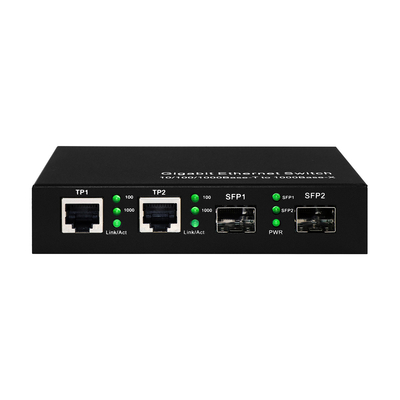
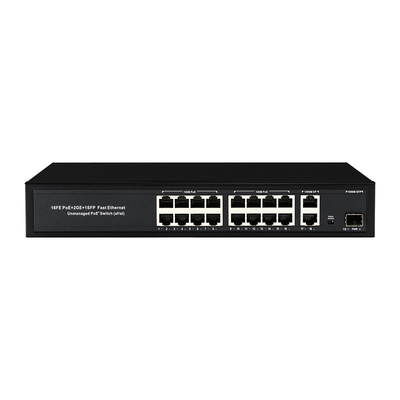
Dans la conception de réseaux modernes, les topologies d'anneau (par exemple, les déploiements basés sur ERPS) sont largement adoptées pour fournir un basculement rapide et une redondance de chemin.
Cependant, la présence d'une architecture en anneau n'élimine pas tous les risques de défaillance en particulier ceux liés aux défaillances au niveau des nœuds et à la perte de puissance.
La question n'est pas de savoir si une bague suffit, mais plutôt:
Contre quels types de défaillances une bague protège- t- elle réellement?
1. Réseaux d'anneaux Les erreurs de chemin d'adresse, pas les erreurs de nœud
Les protocoles d'anneau sont conçus pour:
- Détecter les pannes de liaison
- Recalculer les chemins de redirection
- Restaurer la connectivité dans un délai de convergence défini

Cela fonctionne bien pour:
- Coupe de fibres
- Échec du port
- Interruptions de liaison unique
Cependant, dans les déploiements réels, une grande partie des défaillances ne sont pas liées à la liaison, mais liées au dispositif, telles que:
- Perte de puissance du commutateur
- Défaillance du matériel
- Crash du logiciel
Dans ces scénarios:
- Le nœud devient un point de rupture.
- La circulation ne peut pas passer physiquement.
- La récupération dépend entièrement de la reconvergence du protocole.
2Où la récupération de l'anneau devient insuffisante?
2.1 Temps de convergence différent de zéro
Même une récupération inférieure à 50 ms introduit:
- Perte de trame vidéo
- Interruption du signal de commande
- Instabilité temporaire du service
Dans les environnements nécessitant un flux de données continu:
- Automatisation industrielle
- Surveillance en temps réel
- Aggrégation vidéo à forte charge
Cette interruption est souvent inacceptable.
2.2 Scénarios de perte de puissance
Quand un interrupteur perd de la puissance:
- Il ne fait plus partie du ring.
- Le transfert s'arrête complètement à ce nœud.
Le réseau doit:
Détecter une défaillance
- Reconstruire la topologie
- Pendant cette période:
- La circulation est interrompue.
Dans certaines topologies, plusieurs segments peuvent être affectés
2.3 Topologies non idéales dans les projets réels
Les déploiements sur le terrain suivent rarement des structures d'anneaux parfaites:
- Chaînes linéaires (réseaux de vidéosurveillance à chaîne de marguerites)
- Anneaux tangents ou intersecteurs
- Topologies hybrides avec redondance partielle
Dans ces cas:
- Une seule défaillance de nœud peut perturber plusieurs segments
- Les protocoles d' anneau peuvent ne pas restaurer la connectivité comme prévu.
2.4 Environnements mixtes (appareils gérés + appareils non gérés)
Tous les déploiements ne sont pas entièrement gérés:
- Les projets axés sur les coûts incluent souvent des commutateurs non gérés
- L'équipement ancien peut ne pas prendre en charge les protocoles d'anneau.
Cela crée des points morts où:
- La récupération fondée sur le protocole ne s'applique pas
- Les défaillances se propagent sans protection
3Qu'est-ce que le pontage optique réellement résout?
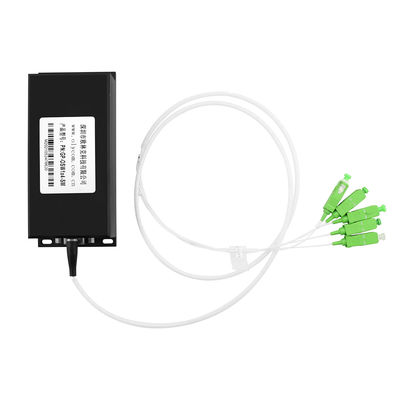
Unemodule de dérivation optiquefonctionne à la couche physique, en veillant à ce que:
- Continuité du trafic même lorsqu'un nœud est coupé
- Aucune dépendance de la convergence des protocoles
- Restauration immédiate de la liaison (temps de commutation proche de zéro)
Il s'adresse directement:
- Échec du nœud
- Perte de puissance
- Dépendance du périphérique intégré
4Quand le pontage optique devient nécessaire?
Unecommutateur de dérivation optiquen'est pas nécessaire dans chaque déploiement en anneau, mais devient critique dans les conditions suivantes:
4.1 Réseaux critiques pour la mission
Systèmes de transport
Energie et services publics
Contrôle industriel
Exigence:
Aucune interruption visible
Comportement déterministe en cas de défaillance
4.2 Environnements limités par la puissance
Pas d'alimentation en redondance
Installations à distance ou extérieures
Risque:
Échec du nœud = déconnexion physique
4.3 Topologies non normalisées
Structures en chaîne ou hybrides
Intersections à plusieurs anneaux
Risque:
L'impact des défaillances dépasse un seul segment
4.4 Aggrégation vidéo ou de données à haute densité
Les piliers de la surveillance
Nœuds de calcul en périphérie
Risque:
Même une brève interruption provoque une perte de données ou une instabilité
5Architecture combinée: anneau + dérivé
Lorsqu'ils sont déployés ensemble:
Les protocoles d'anneau fournissent un redirection au niveau du réseaupendant oLe pontage optique assure la continuité au niveau du dispositif
Cela crée un modèle de protection à deux couches:
|
Couche
|
Fonction
|
|
Couche réseau
|
Récupération du parcours (protocole de l'anneau)
|
|
Couche physique
|
Continuité de liaison (bypass)
|
6Résultat pratique
Comparé aux déploiements en anneau uniquement, l'ajout d'un contournement optique entraîne:
- Réduction ou élimination de l'interruption du trafic en cas de panne du nœud
- Protection contre les scénarios de coupure de courant
- Amélioration de la résilience dans les topologies non idéales
- Compatibilité accrue entre les environnements de dispositifs mixtes
Conclusion
Un réseau à anneau géré améliore considérablement la résilience, mais il ne résout pas complètement la déconnexion physique causée par une défaillance du nœud.
Un interrupteur de contournement optique complète l'anneau en assurant un flux de données continu quel que soit l'état de l'appareil, en particulier en cas de perte de courant ou de panne matérielle.
L'anneau assure la récupération, le pontage assure la continuité.
Dans la conception de réseaux à haute disponibilité, les deux mécanismes remplissent des rôles distincts et complémentaires.


 Votre message doit contenir entre 20 et 3 000 caractères!